
Thoughts on why flexibility should not be an excuse to not try Yoga
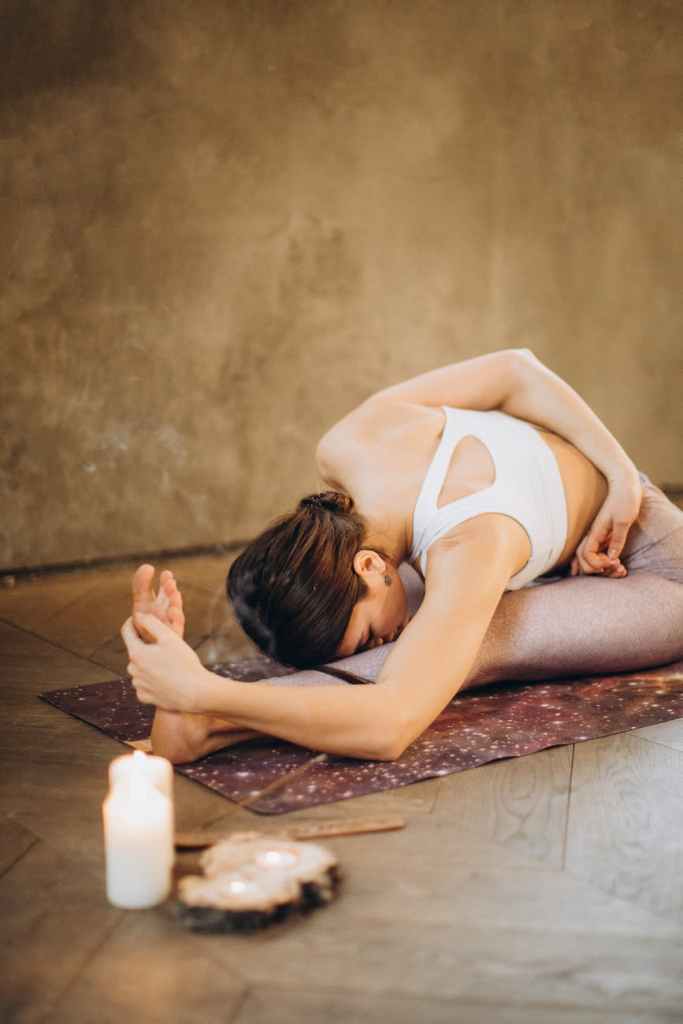
I hear a variation on this comment so often when people I meet find out I am a yoga teacher. Usually I come right back at them with, “Well, I’m a yoga teacher and I’m not that flexible either!” Seriously, I’m not really all that in terms of flexibility. At least not what the average person expects a yoga teacher to be able to do with her body. That picture above? Not me, and I don’t even care if I can ever do it. It doesn’t matter. I hope by the end of this little post you feel the same and still want to try yoga. I can’t put my legs behind my head or do fancy pretzel-y type shapes while balancing on my arms. I can’t even get my legs and hips to cooperate to do a traditional Lotus pose. I used to think that I couldn’t be a yoga teacher or a good yoga teacher if I couldn’t do those things. Then I learned a little bit more about anatomy and found out those movements aren’t natural for most of the human population. And then I started to learn a little bit more about what yoga IS. I’ll write about that someday, but to be honest, I’m still discovering what yoga is all about. It’s a lifelong process of learning more about yoga and oneself. For now, let me tell you what yoga isn’t.
Yes, I know you most likely have seen those beautiful pictures of young, lithe women bending in all sorts of ways with their bodies. Awesome for them and I hope they are healthy and not hurting themselves to get into some of those postures. But the ancient yogis didn’t do more than a few poses, and they certainly didn’t know what a Compass Pose was, or how to “float” into a handstand. The few yoga postures they did were meant to help the body become still to practice meditation and potentially move into a different plane of existence or understanding. “Well I can’t sit still and meditate, now what?”
Don’t worry, I have trouble sitting still as well. It takes practice, and there are different ways to meditate besides sitting still atop a mountain or on your yoga mat. I work to slowly teach people other ways of bringing meditation into their lives through my yoga classes. There isn’t a one size fits all for meditation. And if you don’t want to meditate, then I understand that too. Most people come to yoga for the physical practice.
You aren’t 105 pounds, tan, and doing yoga in a bikini on a beach?!! Ok, well, I guess I should give up now if that’s what yoga is all about. First of all, I don’t even live close to an ocean anymore (please tell me I’m making you laugh a little?). Second, I like sugar too much to let my belly be exposed with a bikini. I guess, lucky for me, I started yoga before instagram existed and when it wasn’t in every other health ad, or maybe I would have felt defeated before I began. The physical practice of yoga as we know today takes a number of different forms. For example, vinyasa is where you move a bit more through a variety of poses, restorative yoga uses props to get you more comfortable and relaxed, gentle yoga is generally easy on the joints, and there’s even chair yoga to help those with more limited mobility access physical components of a yoga practice. There are more styles than the ones mentioned here also. Practicing yoga physically is what most of us think of as yoga, and that is fantastic, because this practice is an amazing gateway to help us feel more connected to our bodies and move in various ways. We may also learn a little bit more about ourselves physically, and experience the sensations within our muscles and joints in a new light. Perhaps you may develop a more nuanced movement within your body that you hadn’t had before yoga, or actually begin to pay attention to the way you move your body throughout your daily life. There are a number of benefits to physically practicing yoga and FEELING what that Warrior 2 is like in YOUR body. Does it make you feel powerful? A little unsteady? Do your legs feel strong? Or tired? Do your arms want to drop down by your sides before the teacher says to do something else? None of it is right or wrong. It’s all an exploration and different experience than you typically get in a regular group exercise class.
If you takeaway nothing else from this post besides my proclamation that I will not publicly wear a bikini, I hope it is this: You don’t need to know how to “DO” yoga to do yoga. Can you breathe? Yes? Congratulations, you are alive and can do yoga! I’m not joking. If the only thing you take away from the first time you do yoga is to take a nice big breath in and out, that is a wonderful start. If all you get out of the first 5 or 10 classes is how to breathe a little slower and more deeply, I would consider that an amazing accomplishment. I am not joking here, and I do like to joke. I work quite hard in my teaching to make yoga less scary and intimidating for people and instill confidence in themselves that it is something they can do. People come to a yoga class for all kinds of reasons: to exercise, to increase flexibility, because their doctor said it would be good for them, for a connection between mind, body & spirit, or to get away from the kids. Yet every class ends pretty much the same. A resting pose called savasana, and then before leaving we all take a deep inhale and exhale. There aren’t many times when I have seen someone leave a yoga class exactly the same as they came into it. It’s not because they did all the moves “right,” were really flexible, or even did all of the yoga moves. It’s because they took some time for themselves to be present with yoga and themselves, and took time to breathe fully and calm the nervous system down.
Hopefully you feel a little more curious about trying yoga if you were on the fence about it before. I’d love to have you join me for class. Let me know if you have other questions about starting yoga that I can answer for you. Feel free to send me an email through this website.

By Laura Liddle
 Gratitude & Ease Yoga